

Quick Summary
Neither format is better in every measurable way. Digital offers lower noise, flatter response and no wear, while many listeners prefer the warmer, fuller character of analog sound. Controlled listening tests often show smaller differences than people expect, so the recording, master and playback chain matter as much as the format.
- Digital measures lower noise, flatter frequency response and wider dynamic range than analog.
- Analog is often described as warmer or fuller, which describes character rather than accuracy.
- Vinyl and digital copies of the same album often come from different masters.
- Matching playback levels and using blind switching are essential for fair comparisons.
- Pick lossless digital for accuracy and archiving, and vinyl for ritual and collecting.
Table of Contents
- What Analog and Digital Audio Actually Mean
- How Analog Sound Is Recorded and Played Back
- How Digital Sound Is Sampled and Reproduced
- Analog vs Digital Audio: Where Each Format Measures Up
- Why Vinyl Sounds Different, and What Causes It
- Vinyl vs Digital Sound Quality in Controlled Listening
- Choosing Your Format: Lossless Audio vs Vinyl for Your Collection
- Frequently Asked Questions
What Analog and Digital Audio Actually Mean
Analog sound is a continuous representation of sound. A microphone turns air pressure changes into an electrical voltage that rises and falls in step with the original wave. Digital audio is different: it measures that wave thousands of times per second and stores each measurement as a number.
That distinction is the starting point for the whole debate. Analog is a physical analogy of the sound. Digital is a set of samples that describe it. Whether one is "better" depends on what you mean by better, and the answer shifts once you separate sound preference from measurable fidelity.
How Analog Sound Is Recorded and Played Back
In a traditional analogue chain, sound is captured on tape or cut into a lacquer master, then pressed into vinyl. On playback, a stylus tracks the groove and the cartridge converts its movement into a signal. Every step adds character, from the tape machine's saturation to the cartridge's frequency response.
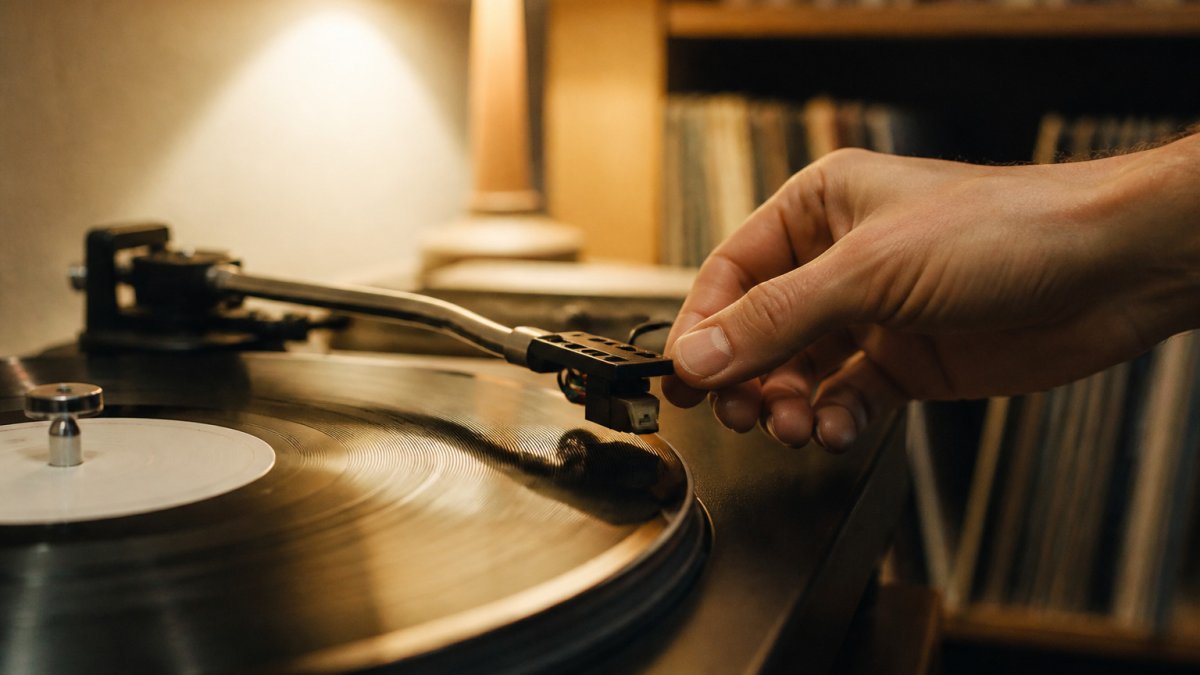
Those imperfections are the source of much of analogue's reputation. Surface noise, wow and flutter, and harmonic distortion are all real, and many listeners find them pleasant rather than objectionable.
How Digital Sound Is Sampled and Reproduced
Digital recording takes samples at a set rate, most commonly 44.1 kHz for CD-quality audio, and records each one at a fixed bit depth, typically 16 or 24 bits. The sample rate sets the highest frequency that can be captured, and the bit depth sets the dynamic range. On playback, a digital-to-analogue converter rebuilds the continuous wave from those numbers.
Many people assume sampling leaves gaps between measurements. Within the limits of the sample rate and bit depth, a properly designed system reconstructs the waveform faithfully, so the gaps are a misconception. The real limits are quantisation noise and the filtering needed at high frequencies, both of which are well understood and, at CD quality and above, inaudible in controlled tests.
Analog vs Digital Audio: Where Each Format Measures Up
On paper, digital has the edge in most measurable areas. It offers lower noise, flatter frequency response, wider dynamic range and no wear. Analogue systems typically show higher distortion and a narrower usable range.
Analogue's case rests on perception and preference. Many listeners describe its sound as warmer, fuller or more immersive. Those descriptions are real experiences, but they describe character rather than accuracy. A system can be pleasing without being faithful, and the reverse is also true. The two standards should not be confused.
Convenience is the other side of the ledger. Digital files are portable, durable and cheap to store and copy, while records take up space, need care and cost more per album.
The article sets out how each format compares on measurable specs and on listener perception.
| Area | Digital | Analog |
|---|---|---|
| Noise | Lower noise | Higher noise |
| Frequency response | Flatter response | Narrower response |
| Dynamic range | Wider range | Narrower usable range |
| Wear over time | No wear | Wears with use |
| Portability and storage | Portable, cheap to store and copy | Takes space, needs care |
| Sound character | Measurably accurate | Often described as warmer or fuller |
Why Vinyl Sounds Different, and What Causes It
Vinyl sounds different for several reasons, and only some of them are about the format itself. The mastering process is a major factor. A digital release and a vinyl release of the same album are often cut from different masters, with different loudness and equalisation choices. Vinyl cannot handle the heavy dynamic compression common in loud modern masters, so engineers often produce a gentler version for pressing.
Playback equipment matters too. Cartridge quality, tonearm setup and turntable isolation all shape what you hear. Surface noise and dust add a layer of crackle that some listeners enjoy and others find distracting.
A useful rule: if two copies of an album sound different, check the master and the playback chain before crediting or blaming the format.
Vinyl vs Digital Sound Quality in Controlled Listening
Casual comparisons are unreliable because several variables change at once. A controlled listening test isolates them. The core method is simple: match playback levels precisely, remove visual cues, and compare the same musical passage from the same master where possible. Each of those controls addresses a known bias.
Level matching. A source that is even slightly louder is almost always judged as better, fuller, or more detailed. This is one of the most robust findings in listening research, and it applies to every format. A difference of a decibel or two is enough to skew a sighted comparison. Use a sound level meter or a test tone to match outputs at the listening position before you judge anything.
EDDIE GRAHAM TRIO - S’WONDERFUL JAZZ(AUDIOPHILE PRESSING) SLEEVE - NM / VINYL →
Blind and double-blind testing. In a blind test the listener does not know which source is playing. In a double-blind test the person running the test does not know either, which removes subtle cues from body language and procedure. Switching should be fast and silent, ideally through an A/B switch box, so that auditory memory does not fade between samples. Short excerpts of ten to twenty seconds work better than long passages.
Expectation and brand bias. Listeners who know they are hearing vinyl often report warmth and depth; the same signal presented as digital may be described as thin. This is not dishonesty, it is how perception works. Expectation shapes what we notice. Removing the label is the only way to separate the sound from the story around it.
What controlled tests tend to show. When levels are matched and the source is hidden, differences between a well-mastered digital file and a good vinyl pressing often shrink or disappear for many listeners, while remaining audible for others on specific material. The outcome depends on the recording, the playback chain, and the listener's training and preferences. That is a more honest summary than declaring a universal winner.
Why the test conditions matter more than the format label. A poorly set-up turntable, a mismatched cartridge, or a noisy pressing will lose against a clean digital file every time, and the reverse is also true. The format sets the ceiling; the master and the playback chain decide where on that ceiling you actually land. Treat any single comparison as one data point, not a verdict.
A note on informal results. Forum-posted listening tests and anecdotal reports are useful for generating hypotheses but are rarely controlled for level, switching speed, or sample size. Treat them as informal rather than settled evidence, and look for the method before you trust the conclusion.
Choosing Your Format: Lossless Audio vs Vinyl for Your Collection
The right format depends on the job you want it to do. A single verdict does not serve a casual listener, an archivist, a studio engineer, and a collector equally. The recommendations below separate those use cases and explain the trade-offs behind each.
Casual listening and streaming. Lossless digital files and well-encoded streams offer the most accurate reproduction at the lowest cost and the least upkeep. A lossless file preserves the master; a compressed stream may not. If convenience and consistency matter most, lossless digital is the sensible default. The weak point is not digital itself but heavily compressed encoding, which is a separate choice from the format.
Archiving and preservation. Digital wins on durability and copyability. Files can be backed up in multiple locations, verified against checksums, and migrated to new media as standards change. Vinyl degrades with each play and is vulnerable to heat, dust, and handling. For preserving a recording, a high-resolution digital transfer is the practical choice.
Studio recording and production. Most modern workflows are digital because editing, recall, and integration with plug-ins are far easier. Analogue tape and outboard gear are still used deliberately for their saturation and character, often printed to digital for editing. The format is a tool in the chain, not a side to take. Many engineers combine both, using tape or analogue modelling where it suits the material.
Live sound. Digital consoles offer recall, routing flexibility, and consistent results across venues. Analogue desks remain valued for immediacy and a particular tonal character, but the operational advantages of digital usually decide the choice for touring and multi-act events.
Collecting and ritual listening. Vinyl rewards attention: the artwork, the pressing, the mastering, and the handling are part of the experience. Collectors often seek specific pressings because the master differs, not because the format is inherently superior. That is a legitimate reason to choose vinyl, and it is a different question from fidelity.
Mastering and production choices often matter more than the format label. A digital release and a vinyl release of the same album are frequently cut from different masters, with different loudness and equalisation. Vinyl cannot carry the heavy dynamic compression common in loud modern masters, so engineers often prepare a gentler version for pressing. Tape saturation, compression, and conversion all shape the result before the format ever reaches your ears. When two copies sound different, check the master and the playback chain before crediting or blaming the format.
A practical starting point. If you want a strong vinyl reference record for judging what your system can do, the Eddie Graham Trio S'Wonderful Jazz audiophile pressing is available at $100.00 NZD and is widely discussed for its spatial detail. For a punchier, louder listen, the Souls of Mischief 93 'Til Infinity double LP is remastered from the original masters and pressed loud for DJs, priced at $90.00 NZD. Choose records by what you want to hear, not by format alone.
Frequently Asked Questions
Is analog sound better than digital?
Neither format is better in every case. Analog recordings capture a continuous waveform, and many listeners prefer the warmth and character vinyl produces. Digital audio, when recorded at high resolution, can measure as accurate or more accurate in technical terms, with wider dynamic range and lower noise. Which sounds better to you depends on the recording, the playback equipment and your own preference. Try both formats on the same album to decide for yourself.
Can digital audio sound as good as analog?
Digital audio can sound as good as analog, and in many measurable respects it performs better. A properly sampled digital signal can reproduce frequencies and dynamic range that exceed what vinyl delivers. Compressed digital files lose information, so the format alone does not decide quality. Lossless files and high-quality masters narrow the gap considerably, and the mastering of the release often matters more than the format.
Does vinyl have better sound quality than streaming?
Vinyl often sounds different from streaming, and many listeners find it more engaging. Streaming services typically use compressed files, which remove some detail. Vinyl's surface noise and limited dynamic range also change the sound, though many people prefer that character. If you want the closest match to a studio master, a lossless digital file usually beats a compressed stream, and a well-cut pressing of a good recording can be a rewarding experience.
What affects sound quality more: the format, recording or playback equipment?
The recording and mastering usually matter most, followed by playback equipment, with the physical format ranking third. A poorly mastered vinyl pressing can sound worse than a well-mastered digital file, and the reverse is also true. Speakers, amplifiers and the room have a large effect on what you hear. Focus on a good master and a playback setup you enjoy before you worry about the format itself.
